
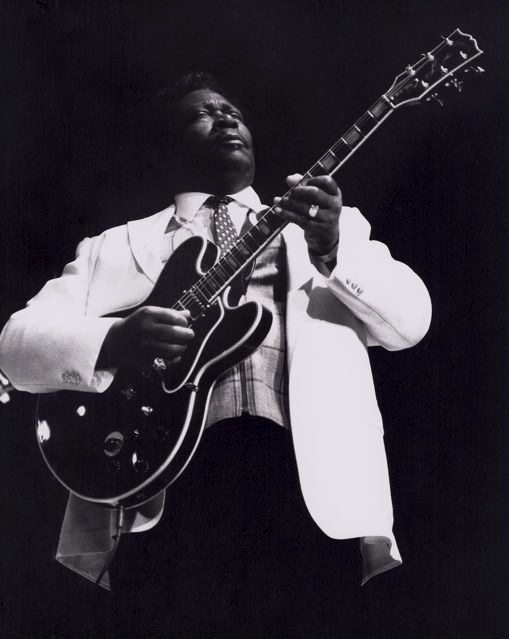
B. B. King performing “Why I Sing the Blues” can be heard at https://www.youtube.com/watch?v=ccHrgxsO9z0.
For more on the dikenga and yowa, see the notes for Chapter 2 of this book.
The McIntosh County Shouters of the Georgia Sea Islands can be heard performing a number of traditional Gullah ring shouts, with historical commentary by a member of the group. Notice in the second piece performed by the group that four women are moving in a counterclockwise direction, a traditional movement with African roots also related to the dikenga and yowa. See https://www.youtube.com/watch?v=uxPU5517u8c.
To read a full transcript of the Negro Act of 1740 in South Carolina, find it here at https://slaveryandfreedomlaws.lib.unb.ca/node/253/legal_article/pdf.
For contrasting contemporary Black and white views of the Stono Rebellion, and an interview with George Cato, great-great-grandson of the leader of the Stono Rebellion, see https://www.nationalhumanitiescenter.org/pds/becomingamer/peoples/text4/stonorebellion.pdf.
For John K. Thornton’s commentary on Stono, see his paper “African Dimensions of the Stono Rebellion,” in American Historical Review 96 (October 1991): 1101–13. Available online at https://www.jstor.org/stable/2164997.
For more on Mark Knowles and his references to Marian Hannah Winter, see his Tap Roots: The Early History of Tap Dancing (Jefferson, NC: McFarland & Company, 2002).